 iGotTrip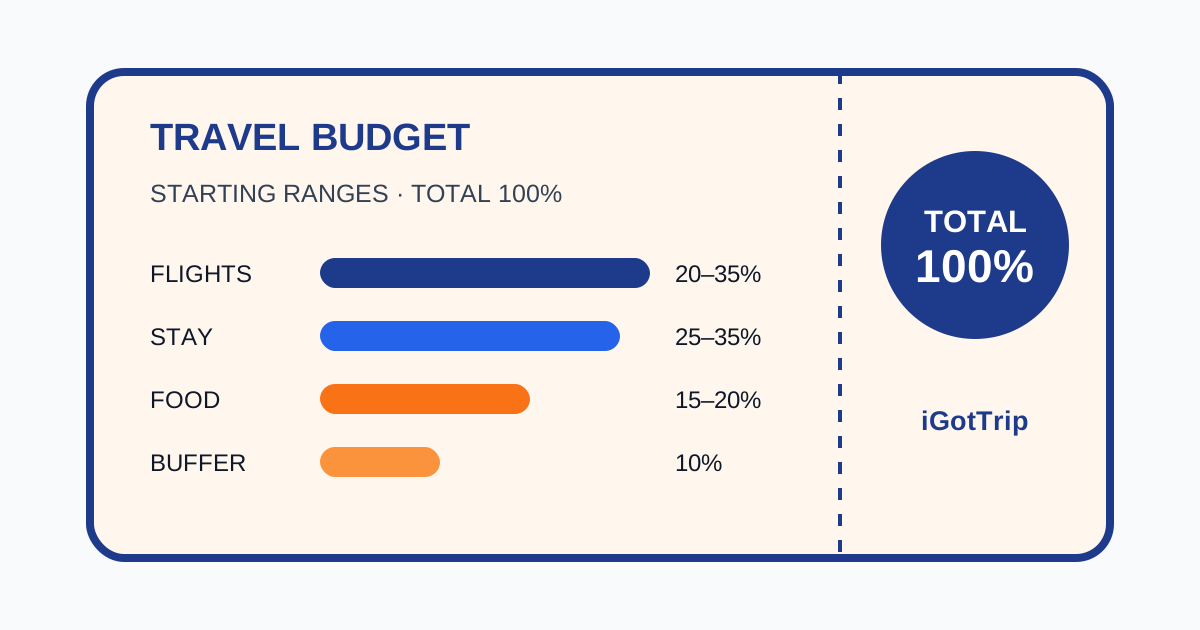
Travel budget percentages are a starting framework, not a universal standard. They turn one total limit into visible trade-offs, but the right split depends on where you depart, how long you stay, who travels with you, and which parts of the trip matter most.
What should you decide before splitting a travel budget?
Decide the total trip limit first, reserve 10% for contingency, and enter every known fixed cost before adjusting flexible categories. This order keeps a cheap-looking daily allowance from hiding an expensive flight or hotel and makes the amount available for choices clear.
- The selected percentages in the finished plan must add up to 100%.
- Protect 10% as contingency before dividing the rest.
- Record booked flights, rooms, insurance, and required transfers at their known amounts.
- Change flexible food, activity, transport, and shopping amounts only after fixed costs are visible.
- Treat every range as a prompt for a decision, not as a promise about what a destination costs.
What percentage of a travel budget goes to each category?
A useful first draft gives flights and lodging the largest shares, protects contingency, and leaves adjustable bands for daily choices. Start with the seven rows below, but select one number for each row so your actual plan—not the upper ends of every range—totals 100%.
| Category | Starting range | What belongs here |
|---|---|---|
| Flights | 20–35% | Base fare, required taxes, bags, and seats |
| Lodging | 25–35% | Room rate, required taxes, and mandatory property fees |
| Food | 15–20% | Meals, drinks, groceries, and planned snacks |
| Local transport | 5–10% | Airport transfer, transit, taxis, and local vehicle costs |
| Activities | 10–15% | Admission, tours, experiences, and planned entertainment |
| Shopping | 0–10% | Gifts and optional personal purchases |
| Contingency | 10% | Unexpected but necessary changes or fees |
The six variable ranges cannot all be set to their maxima at once. Their upper ends total 125% before contingency, or 135% after adding the protected 10%. The table is therefore a menu of possible emphasis: raising one share requires lowering another, increasing the total limit, or changing the trip.
Make the trade-off visible
Put the selected percentage and planned amount beside every category. A range can guide the first draft, but only the selected numbers can prove that the finished budget totals 100%.
How do you calculate a category percentage?
Divide a category’s planned amount by the total trip limit and multiply by 100. Calculate the spendable amount separately by removing contingency first, so protected money does not quietly become dining, upgrades, or shopping money.
category percentage = category planned amount ÷ total trip limit × 100
allocatable budget = total trip limit − contingency
For a ₩2,000,000 limit, a ₩500,000 flight share is 25%. A 10% contingency is ₩200,000, leaving ₩1,800,000 allocatable across the other six categories. Percentages help compare the structure; amounts still control what you can actually book or spend.
How should the percentages change for different trips?
Change the split according to the cost that defines the trip, while keeping the total at 100% and the contingency visible. Do not force a short nearby break, an intercontinental journey, and a family holiday into the same pattern.
Short-haul trips
Short-haul travel can push flights toward the lower end when the route is inexpensive, but a two- or three-night stay may make lodging a larger percentage because there are fewer days over which to spread it. Use the released flight share for the hotel, local transport, or the activity that motivated the break.
Long-haul trips
Long-haul travel often moves flights toward the upper end. Keep contingency intact and look first at dates, route, cabin, bags, or trip length if the fare crowds out daily spending. Extending the trip may reduce the flight percentage without making the trip cheaper, so judge both the share and the total amount.
Accommodation-led trips
Accommodation-led trips may justify more than the starting lodging range when the property is part of the experience, a safe location reduces transport needs, or a family needs a particular room layout. Fund that choice deliberately by lowering optional activities, shopping, or transport—not by pretending the room costs less or erasing the reserve.
Food-led trips
Food-led trips can move meals above the standard band when markets, tasting menus, or regional cooking are the main purpose. List must-book meals separately from ordinary daily food. A grocery breakfast or simpler lunch can preserve the experiences that matter without turning every meal into a restriction.
Family and group trips
Family and group budgets must separate per-person costs from shared costs. Flights and tickets usually multiply by traveler, while rooms, taxis, and rentals may be shared. Enter those units first, then calculate percentages from the group total. Also allow for room combinations, child policies, baggage, seating, and schedule changes that a solo plan would not need.
What does a complete 100% example look like?
This ₩2,000,000 example selects one percentage per category and totals exactly 100%. It is arithmetic guidance in Korean won, not a destination quote or current price; replace every amount with figures for your own route, dates, party, and preferences.
| Category | Selected share | Planned amount |
|---|---|---|
| Flights | 25% | ₩500,000 |
| Lodging | 30% | ₩600,000 |
| Food | 15% | ₩300,000 |
| Local transport | 7% | ₩140,000 |
| Activities | 8% | ₩160,000 |
| Shopping | 5% | ₩100,000 |
| Contingency | 10% | ₩200,000 |
| Total | 100% | ₩2,000,000 |
The selected activity share is below its starting range in this example because lodging takes 30% and the plan still protects contingency. That is a valid trade-off if the itinerary relies on free or low-cost activities. The percentages explain the choice; they do not declare it correct for every traveler.
Which signs show that the budget split is risky?
A risky split either has no room for disruption or hides a total that the traveler cannot use in practice. Review the plan before booking if any of these signs appears:
- Contingency is zero: one necessary change can push the whole trip above its limit.
- Fixed costs crowd out daily spending: the remaining food and transport amounts cannot support the itinerary.
- Optional and essential costs are mixed: shopping or upgrades can consume money needed for lodging or transfers.
- The total is above 100%: the plan contains competing wishes, not a funded budget.
Correct the largest adjustable decision first. Moving dates, changing a room, shortening the stay, or removing one expensive option usually restores the plan more effectively than trimming every small pleasure.
Frequently asked questions about travel budget percentages
Use these answers as decision rules, then verify the split against your actual total and fixed costs. A percentage is useful only when its amount can support the trip you described.
What percentage of a travel budget should go to flights?
Start with 20–35%, then enter the actual all-in fare as soon as you have it. A nearby route may fall below the band, while a long-haul or peak-date fare may exceed it. If the share rises, reduce another category or revise the trip rather than letting the total exceed 100%.
Is it bad if accommodation is more than 40%?
Not automatically. More than 40% can be reasonable for a short stay, a high-cost city, a family room, or a property that is central to the experience. It becomes a problem when the remaining amount cannot cover food, transport, activities, and contingency.
How much contingency should a travel budget include?
Use 10% as a clear starting point. Increase it when bookings are inflexible, connections are fragile, or replacement costs could be high. Reduce it only when specific protections cover the risks and the decision is explicit; do not use the reserve to make an overfull plan appear balanced.
Should shopping be included in the travel budget?
Yes. Give shopping a visible 0–10% share even if the chosen amount is zero. Keeping gifts and personal purchases separate prevents optional spending from being mistaken for food, transport, or contingency and makes it easy to cut if another category rises.
How do you turn the percentage split into a working plan?
Turn each selected share into an amount, replace estimates whenever you book, and recalculate the remaining categories without touching the protected reserve. For the full sequence from total limit to daily allowance, read How to Make a Travel Budget in 7 Steps.
The best split totals 100%, funds necessary costs, protects a buffer, and directs the rest toward the experience you chose.
Build your own editable split: Open the free travel budget planner →